

The Right Hearing Aid For Your Life — Not Our Quota
We carry all major brands and fit every device to your hearing loss, your lifestyle, and your budget. You’ll know exactly why we recommend what we recommend — and you decide what happens next.
- All major brands, one unbiased recommendation
- Matched to your hearing loss, lifestyle, and budget
- No quotas. No same-day pressure.

Most hearing aid consultations start with a product. Ours start with you.
Before we talk about devices, Hunter Young — 10 Decibel’s licensed hearing specialist — will review your hearing test results, ask about your daily routines, and get a real picture of what you’re dealing with: where you struggle most, what environments matter to you, and what you’ve already tried. The recommendation comes from that conversation, not from a manufacturer agreement or a monthly sales goal.
If you’ve already been fitted somewhere else and it didn’t work out, you’re welcome here too. We’ll take an honest look at what you have, what might be adjustable, and whether new devices would actually make a meaningful difference.
What Happens at Your Consultation
Your appointment runs about 60 minutes. Here’s what we cover.
Review Your Hearing Profile
We start with your audiogram. If you’ve had a recent hearing evaluation — here or elsewhere — we’ll use those results. If you haven’t been tested yet, we’ll complete an evaluation first. Either way, everything that follows is based on your actual hearing, not a general profile.
Understand Your Daily Life
Hunter will ask about the specific situations where hearing has become difficult: conversations at the dinner table, phone calls, crowded restaurants, watching TV, meetings at work. The goal is to match technology to real challenges — not sell you the most expensive option on the shelf.
Walk Through Your Options
We carry all major hearing aid brands — Starkey, Phonak, Oticon, Signia, Widex, ReSound, Rexton, and Unitron — across every technology tier and price point. You’ll hear a clear explanation of what each option does, why it might or might not be right for your hearing loss, and what the differences actually feel like in real-world use.
Discuss Fit, Style, and Budget
Hearing aids come in several styles — from behind-the-ear receivers to completely-in-canal devices — and choosing the right one involves more than preference. We’ll walk through what works best for your type and degree of hearing loss, your dexterity, your lifestyle, and what you’re comfortable spending.
Make a Decision on Your Terms
There’s no deadline and no pressure to decide the same day. Some patients leave with a clear choice; others need time to think. Both are fine. If you want to try a device before committing, ask — we’ll tell you honestly what options exist.
Every Major Brand. No Allegiances.
As an independent clinic, we’re not locked into any manufacturer’s program. That means we can carry every major brand and recommend based entirely on clinical fit — not on which company is offering the best incentives this quarter.
Not sure what any of these mean? You don’t need to. We’ll explain the relevant differences based on your specific hearing loss and what matters most to you.
Honest Pricing. No Hidden Fees.
Hearing aid pricing varies based on technology level, not brand. We carry devices across every tier and will be straightforward about what each level offers — and whether the difference in cost is likely to matter for your hearing loss and lifestyle.
Entry
Solid performance for mild-to-moderate hearing loss in quieter environments. A strong starting point for patients new to hearing aids.
Standard
Improved noise handling and more listening programs. Well-suited to patients who spend time in varied environments and want reliable everyday performance.
Advanced
Enhanced directional processing and Bluetooth connectivity. A good fit for active patients managing hearing loss in complex or noisy settings.
Premium
The most sophisticated noise management, AI-driven sound processing, and full wireless connectivity. Best for patients with significant hearing loss or demanding listening environments.
Already Have Hearing Aids? We’ll Take an Honest Look.
If you were fitted elsewhere and something isn’t working — the sound quality feels off, the devices are uncomfortable, or you’re just not getting the benefit you expected — come in. We’ll evaluate your current devices, check the programming against your audiogram, and tell you plainly whether an adjustment would help or whether new devices would make a real difference.
We accept all hearing aid makes and models. Your first clean and check is always free. And we’ll never tell you that you need new devices if we don’t believe you do.
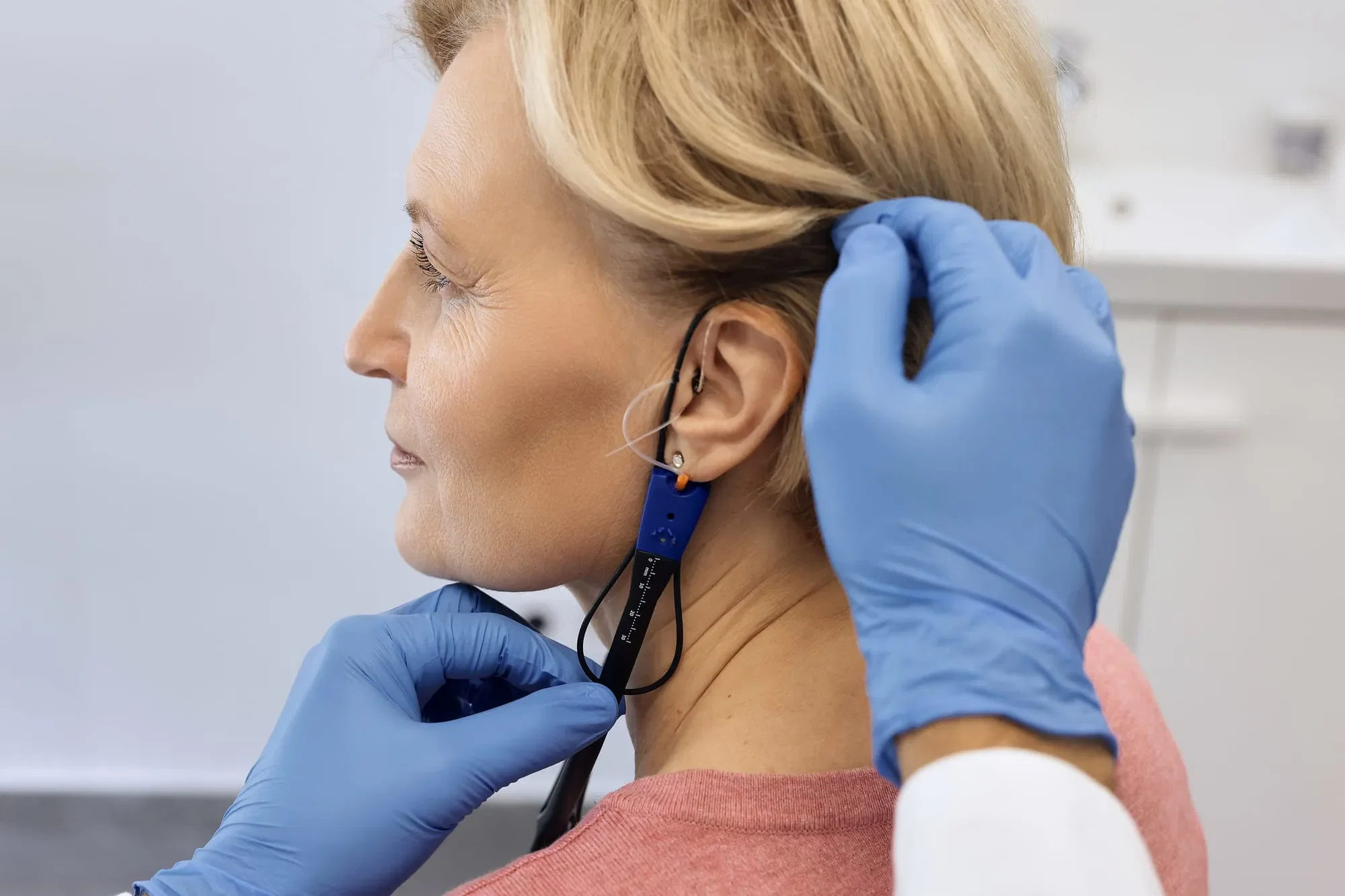
Why Patients Choose 10 Decibel Hearing
Independent guidance, consistent care, and enough time to understand every option.
Independent. No Quotas.
We’re not tied to any manufacturer or required to hit sales targets. Our only measure of success is whether you can hear better.
Same Specialist, Every Visit
You’ll work with Hunter Young — not whoever’s available. The same person fits your devices, programs them, adjusts them over time, and knows your hearing history.
60+ Minute Appointments
We don’t rush. Your consultation includes time to ask every question, hear honest explanations, and understand your options without feeling like you’re holding up the next patient.
Common Questions
You do not have to have everything figured out before a consultation. We are here to answer questions, explain your options, and help you feel comfortable taking the next step.
If you do not see your question here, call us or schedule a consultation. There is no pressure — just thoughtful guidance and honest answers.
A recent hearing evaluation is helpful — it gives us the audiogram data we need to make accurate recommendations. If you don’t have one, we can complete a full evaluation at the same appointment. Just let us know when you book.
We don’t sell OTC devices, but we’re happy to discuss whether they’re appropriate for your type and degree of hearing loss. For mild, high-frequency loss in otherwise healthy ears, OTC can be a reasonable starting point. For most patients with aidable hearing loss, prescription devices fitted and calibrated to a current audiogram will perform meaningfully better — and we’ll tell you honestly which category you fall into.
Hearing aid trial policies vary by manufacturer and model. Ask us when you book — we’ll tell you what’s available for the devices you’re considering and what the process looks like.
Most devices come with a manufacturer adjustment period, and most fitting issues can be resolved with programming changes rather than a return. We schedule follow-up visits in the first three months specifically to work through any problems. If after adjustments you still feel the device isn’t right, we’ll help you understand your options.
Device pricing starts around $1,600 per pair and ranges to $5,500 per pair at the premium tier. The right price point depends on your hearing loss, lifestyle, and what you want the technology to do. We’ll walk through the options transparently — and financing is available if cost is a concern.
Some plans include hearing aid benefits, and several insurance programs — including United Healthcare Hearing, TruHearing, and Start Hearing — cover devices purchased through our clinic. We work with most major plans and can help you verify your benefits before your appointment. We do not accept Medicaid. See insurance and coverage.
Starkey, Phonak, Oticon, Signia, Widex, ReSound, Rexton, and Unitron. We also service devices from brands not on this list that were purchased elsewhere.
Start With a Conversation
There’s no commitment required to come in. Bring your questions, your current devices if you have them, and whatever’s been on your mind about your hearing. We’ll take it from there.